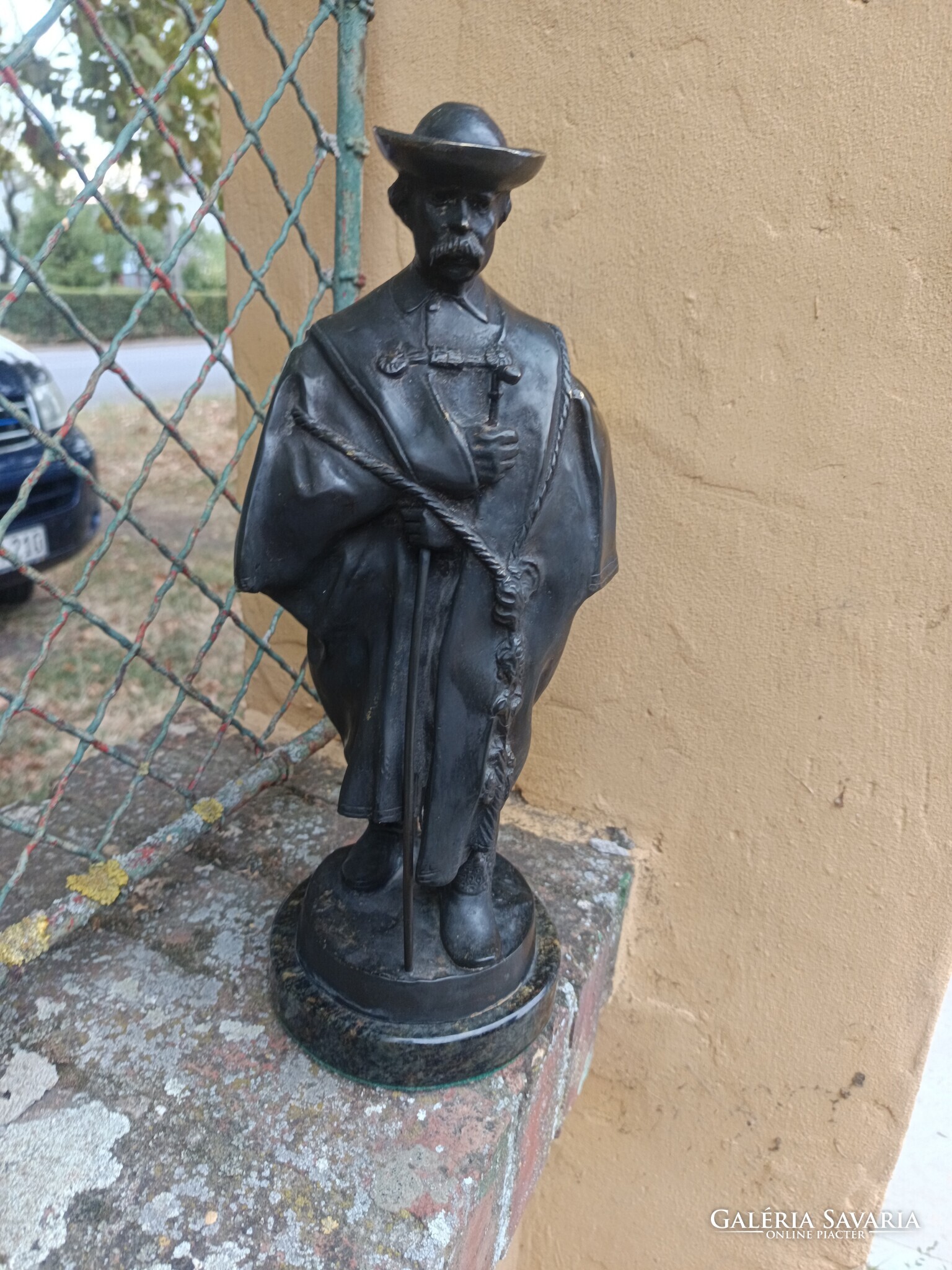
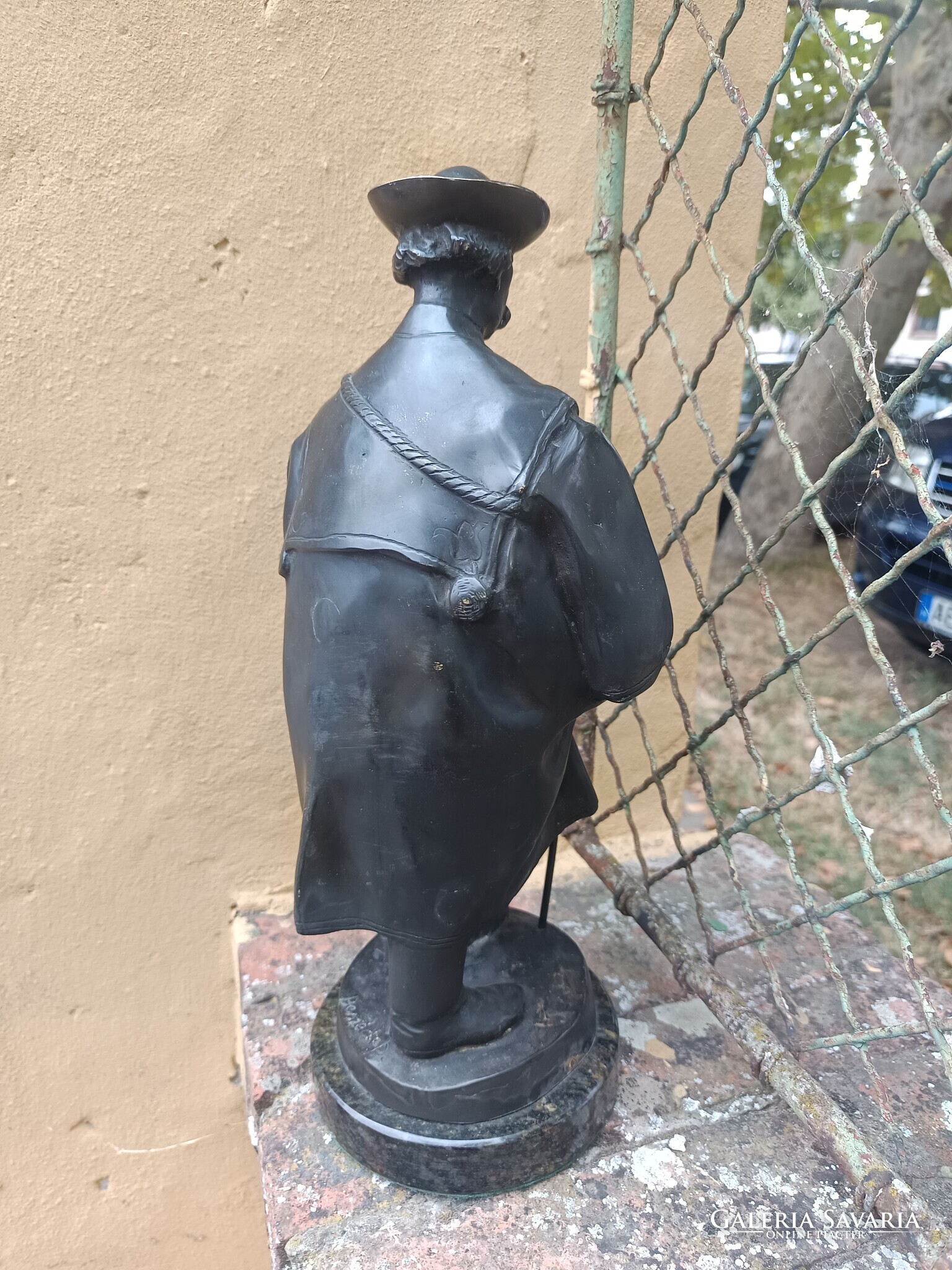
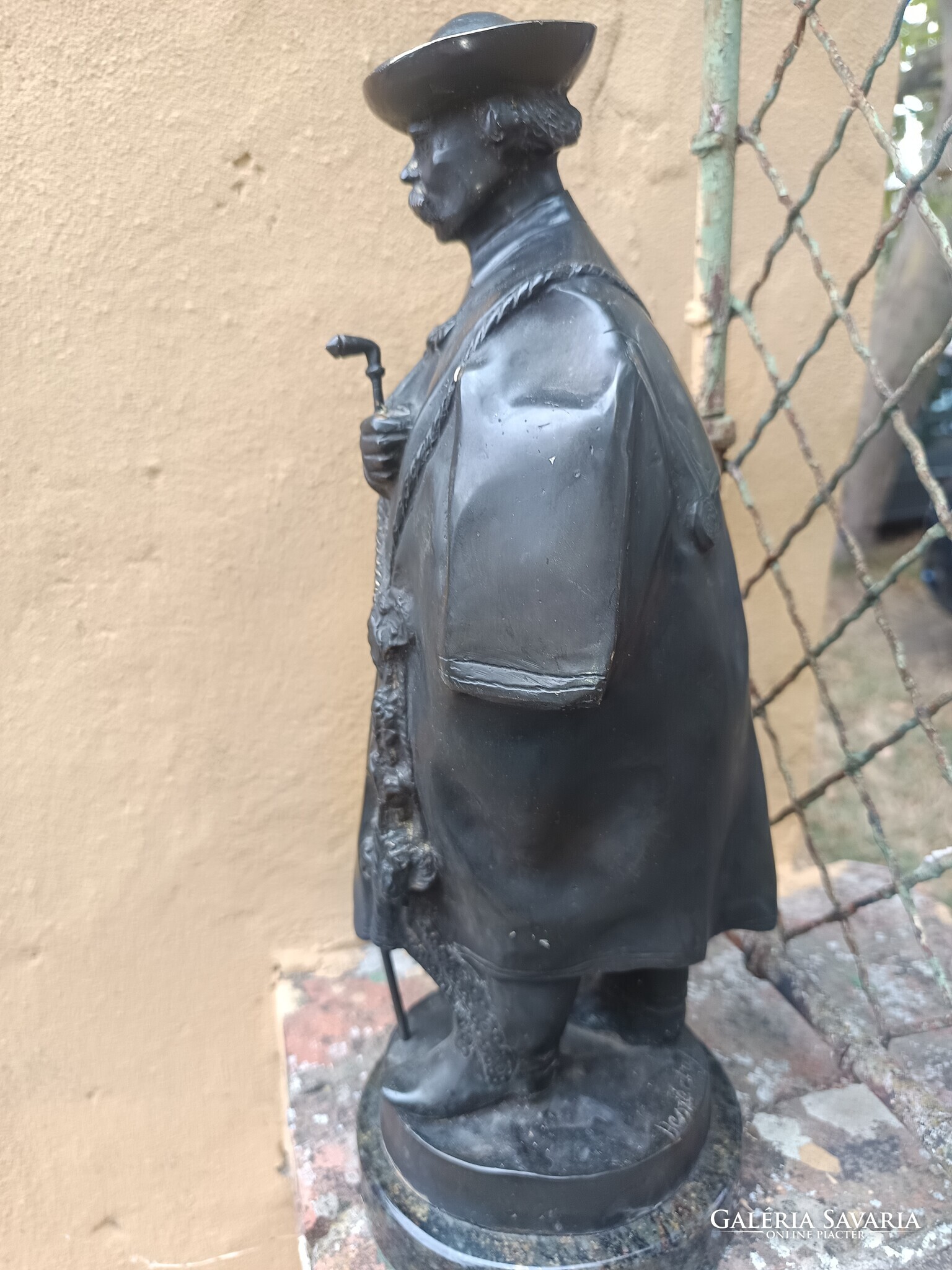
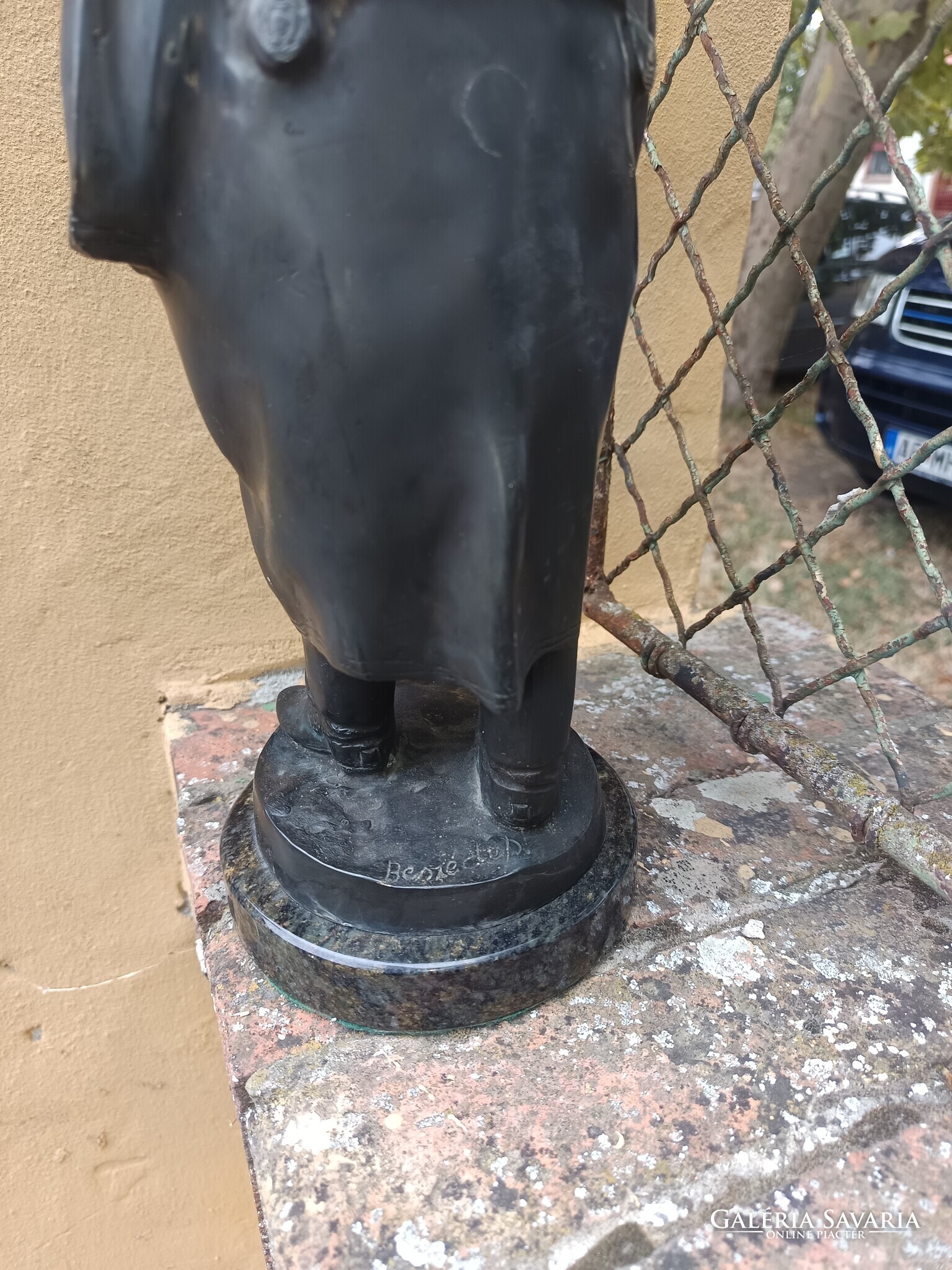
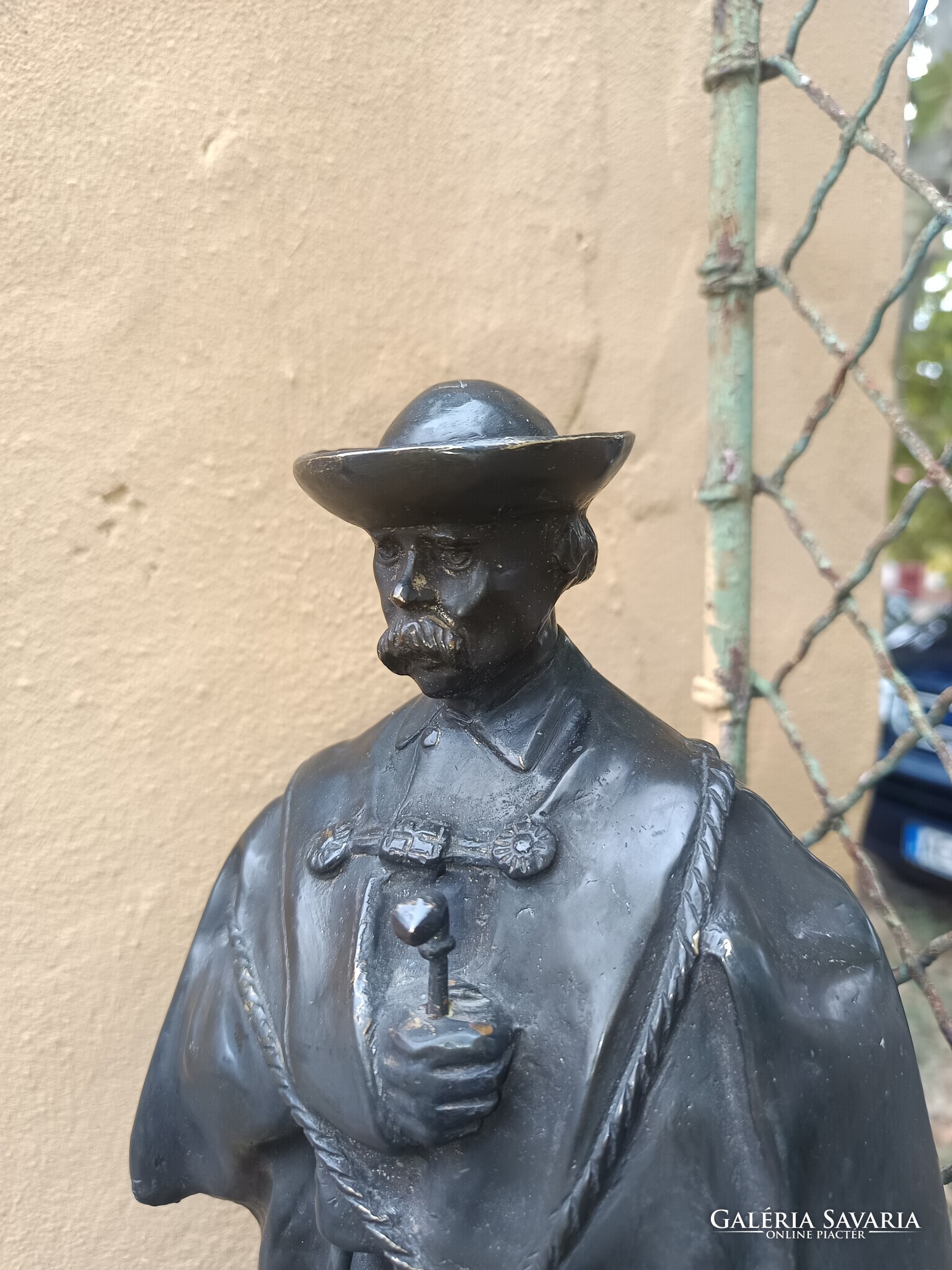
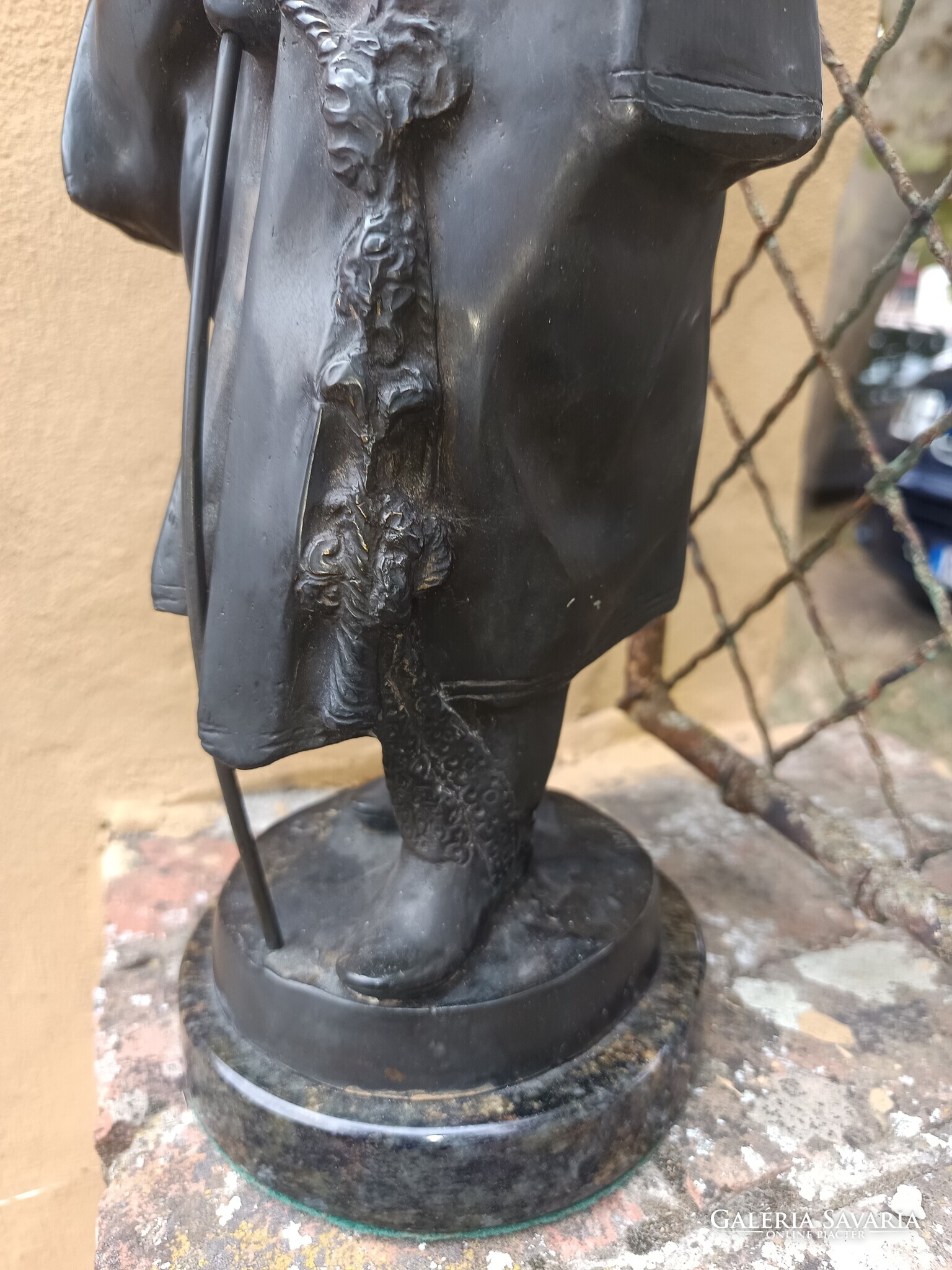
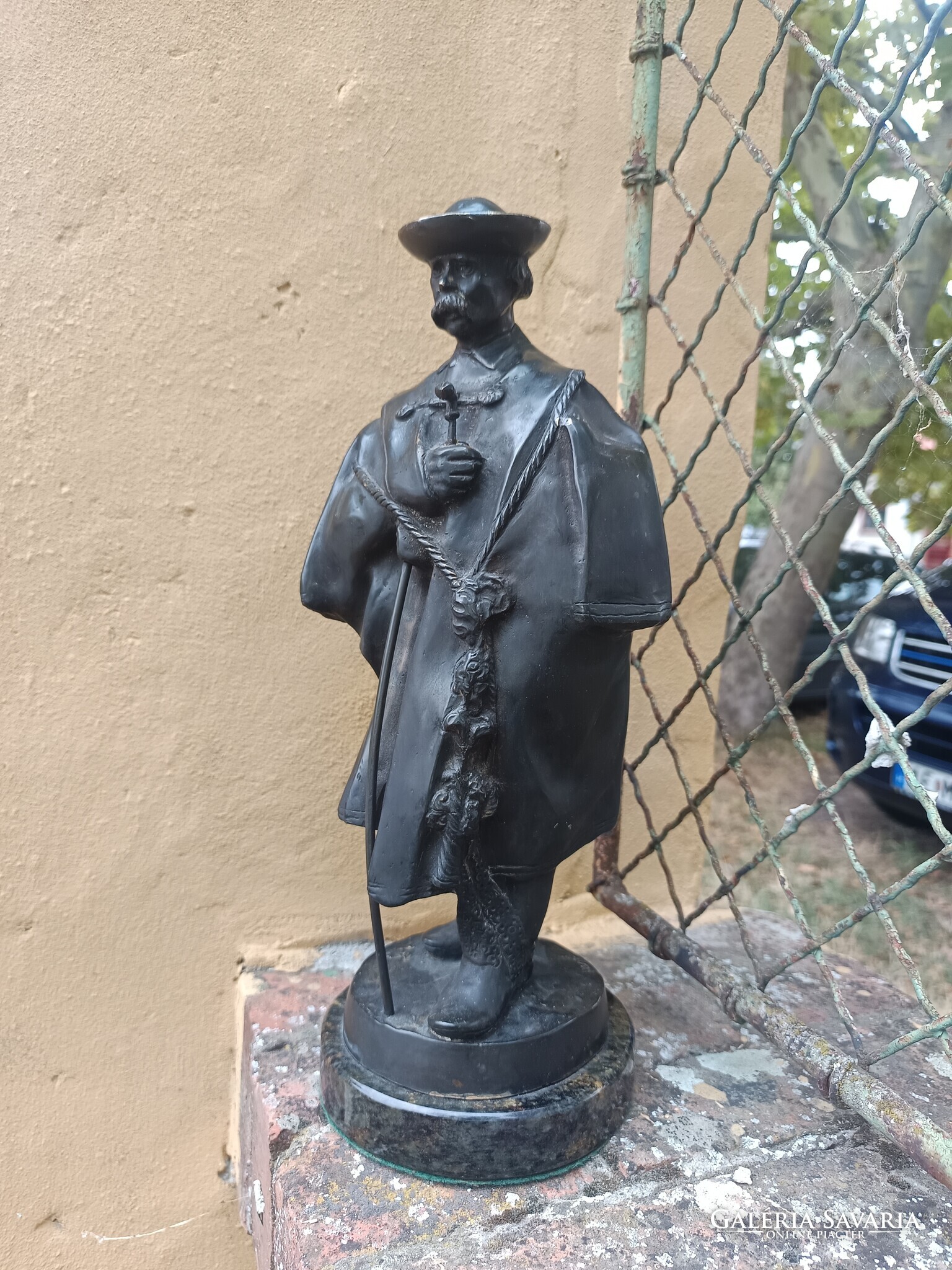
János László Beszédes Front Sculpture. Pipe-smoking Shepherd

Interested in the price of other items? Go to Archive Catalog.
| Sold on: | Sep. 12, 2026 12:05 |
| Listed: September 11, 2026 |
| Item code: 8405333 |
| Views: 130 |
| Watchers: 2 |
| Offers: 4 offers |
 Csongrád county


Learn more about the actions to make our online marketplace more secure and convenient. Details
| Subject: | people |
| Material: | bronze |
| Mark/Sign: | yes |
| Age: | 1900-1939 |
| Condition: | flawless |
Fantastic piece, affordable price. With base, 39 cm. In perfect condition.
His parents did not look favorably upon his artistic talents expressed in early childhood, so he left home at 17 and took care of himself. He studied at the industrial drawing school; his notable teachers were Lajos Mátrai and Ferenc Vasadi. In 1890, he stayed for seven months at his uncle's in Constantinople, where he decorated a bank palace with friezes. After returning, he continued his studies with great hardship in Vienna, then in Munich and Paris. In the latter city, he worked alongside Alexandre Charpentier, who helped him make a living. Unable to endure poverty any longer, he joined the French military topographical institute's colonial department, being sent to French colonies as a field draughtsman during the occupation of Asian and African territories. He modeled a series of small-sized human types (terracotta, bronze) from North Africa, Siam, Tonkin, and Cambodia. Returning from there, he studied under Gustav Eberlein in Brussels and Munich, then worked with sculptors Tilgner and Theodor Friedl in Vienna, mainly encouraged in genre depiction by the latter. He fulfilled his military obligations between 1896 and 1899. After discharge, he spent some time in Hortobágy and finally settled in Budapest. His memorable works exhibited at the National Salon include Adam and Eve (1903); Conventio, plaster; Abandoned, plaster; Spring, terracotta; Working, terracotta (1905); "Lunch!", plaster; Dawn, plaster; Old Shepherd, plaster (1907). He continuously appeared at the Kunsthalle exhibitions from 1906, also with smaller genre sculptures and busts. His works, including Farmer Ambrus, Cornflower, and Rorate, were purchased by the Ministry of Agriculture. In 1910, he received a state bronze medal in Vienna. Several of his works are preserved in the Hungarian National Gallery. In 1923, his works were featured in a memorial exhibition at the Kunsthalle.
From the 1910s, his residence was listed as the artist colony on Százados Street in Budapest. The Zsolnay Porcelain Factory also used some of his small sculptures as models for figurative products.
Payment options
| Wire transfer in advance |
| Cash |
Shipping options
|
Local pickup
|
Budapest |
|
Mail
|
4000 HUF |